
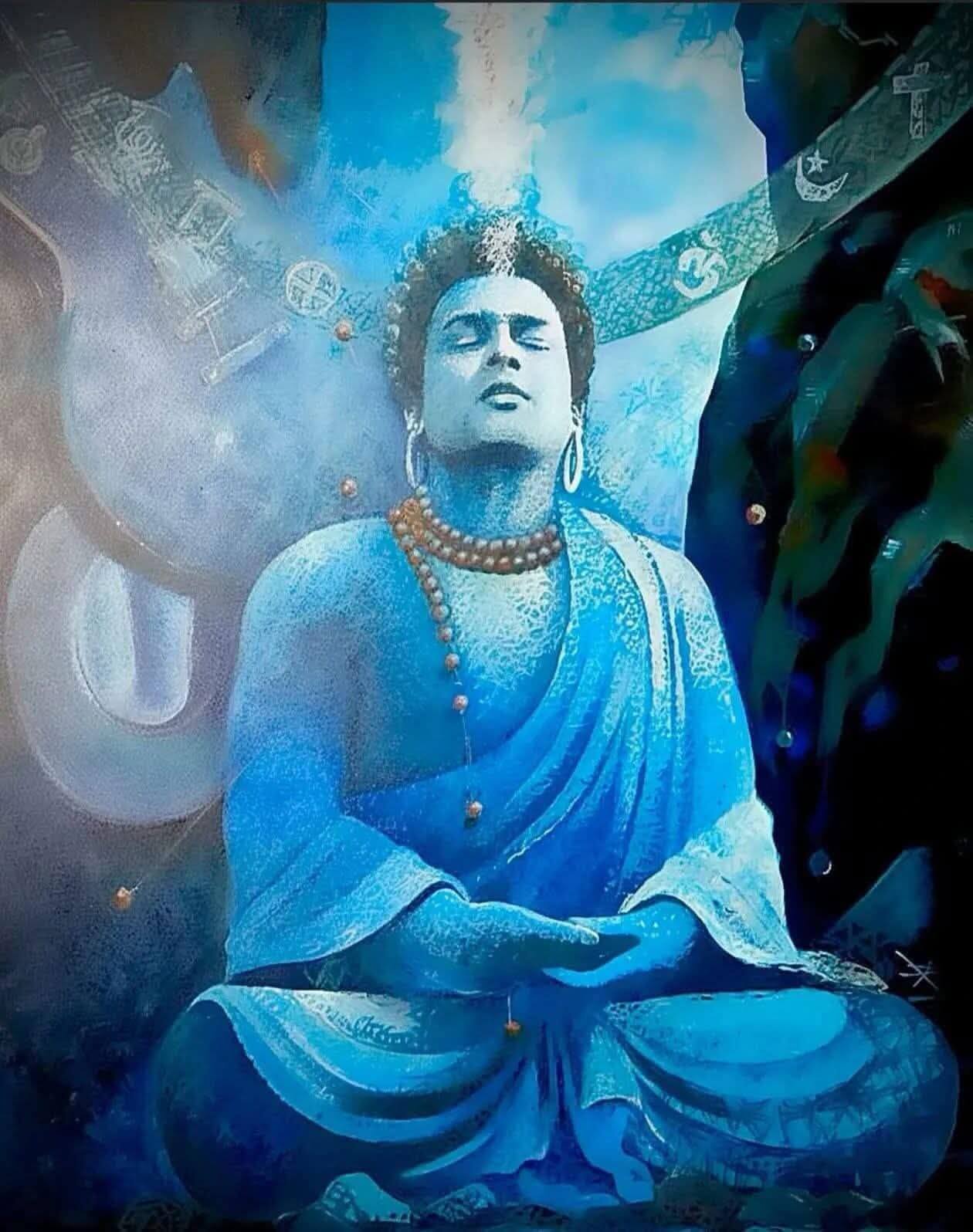
— Mahbubul Hoque
‘Zubeenism’ is a term conceptualised recently, after the mysterious death of Zubeen Garg, the Heartthrob of Assam. The suffix “-ism” is used to mean a belief, principle, system, or movement. It often indicates a set of ideas, or philosophy or a way of thinking followed by individuals or groups. For example, Patriotism means love, loyalty, and devotion toward one’s own country. It is the feeling of pride and responsibility a person has for their own nation — shown through respect & care for its soil, people, resources, culture, nature, law and the willingness to work for its progress and defend it when needed. Similarly, I am trying to mean Zubeenism as a sensation of cultural identity, emotional expression, and social consciousness inspired by life, music, and the ideology of the legendary artist Zubeen Garg.
It is believed that divine intervention occurs when there is a state of imbalance, with evil overpowering good. It promises that even in the darkest times, a divine power will come to restore order. The last decade of the twentieth century (1990s) was a period of socio-political unrest, identity crisis, and cultural transition in the state of Assam. The state was emerging from years of insurgency, economic uncertainty, and the aftereffects of the Assam Movement. Zubeen Garg chose music and culture to connect people with a purpose. He sang
“ক্লান্ত জীৱন আজি
ক্লান্ত দিঠক আজি
দুচকুত ভাঁহে মাথোঁ
শান্তিৰ শুভ্ৰ ৰথ
মুকুতিৰ শুদ্ধ পথ…”
‘Klaanto jeevan aji,
klaanto dithok aji,
dusokut vaahe maathu
xantir xubhra rath,
mukutir xuddha path’
Meaning: Today, life feels exhausted,
The eyes are weary too.
In my vision floats only
The pure chariot of peace,
The sacred path of liberation.
His songs — blending modern musical styles with Assamese folk and cultural essence — resonated deeply with the younger generation. Through his music, Zubeen helped revitalize Assamese popular culture, bridging the gap between traditional and contemporary sounds. His popularity also contributed to restoring pride and unity among Assamese people, reaffirming cultural identity amidst social and political uncertainties. He became not just a musician but a voice of resilience, youth, and regional identity, marking his importance and relevance in the modern Assamese society.
Development of Zubeenism can be viewed in three stages:
Origins (1990s): The emergence of Zubeen Garg in the turbulent phase of Assam as a powerful cultural icon to redefine the musical and emotional landscape of Assam.
Growth (2000s): With his multifaceted talents in music and films representing cultural inclusiveness and connectivity.
Consolidation (2010s- present): Emerging as a people’s voice against corruption & injustice, advocating social harmony and coexistence.
Zubeenism is enriched & popularised with his simplicity, compassion and humanity. It is a way of feeling, thinking, and belonging. We can assume Zubeenism as a way of harmonious life with 4 C’s: Cultural pride, Compassion, Conscience & Coexistence.
Cultural Pride
Zubeen Garg could have been established in Mumbai for his divine talent and effort. But he came back to his motherland for love towards his own land and people. Zubeenism encourages preservation of local identity with openness to change. For him, art was not mere entertainment; it was a tool to awaken hearts and unite people. Apart from music, he created a revolution in the Assamese cinema industry with ‘Mission China’. “Douri Douri jaam, Axomiya cinema saam”— his appeal denotes love and responsibility. “Kitap nopoha jatik gamochai bosabo nuare”, i.e., Gamocha can’t save a community without reading habit. He wanted to express that the true strength of a community lies not only in preserving its cultural symbols but also in nurturing an educated and enlightened generation.
Compassion
His music, words, and actions reflected compassion, courage, and togetherness. Beyond being a singer, composer, or filmmaker, he was admired for his fearless voice, childlike honesty, simplicity, and love for people. Behind his flamboyant public persona was a man with a tender heart — someone who felt others’ pain deeply and helped quietly, without any publicity. During floods, he personally organised relief. He helped the poor & numerous patients in the treatment of diseases, including cancer. His compassion with philanthropic work was silent yet boundless and heart-touching.
Conscience
Zubeen Garg was called ‘Epitome of authenticity’. He became the voice of the voiceless. He spoke openly and boldly on issues that others avoided. He questioned on corruption, intolerance, and injustice. He was never afraid to speak his mind, even when it invited controversy. In an age when most celebrities carefully choose their words to protect their image, Zubeen spoke from the heart. “Politics nokoriba bondhu”- it was Zubeen Garg who could challenge political leaders whenever needed. He could say that no need to show extra respect to people like politicians if there is nothing to learn. That courage made people love him even more, because they saw in him a reflection of their own anger, frustration, and hope.
Coexistence
“Mur kunu jaati naai, mur kunu dhormo naai, mur kunu bhogowan nai– moi mukto, moi Kanchanchunga.”
He said, “I have no caste, no religion, no God — I am free, I am Kanchenjunga.” Perhaps he might have said it out of deep frustration, seeing the divisiveness in society in the recent past. Zubeen rose above caste, religion, and sect. It was his way of saying that true divinity lies in kindness, honesty, and love for all – the doctrines that all religions preach. In his death, that message became even stronger. For the first time in Assam’s history, priests, maulanas, and monks stood together at his funeral and offered prayers. At Kamarkuchi in Sonapur, where he was cremated, people continue to gather every day to pay their respects. His song- “Mayabini…” has become like a prayer of all people, irrespective of caste and religion. ‘Zubeen Kshetra’ in Sonapur has already become a new destination of unity and faith- a place of pilgrimage leading to a new Assam.
Zubeen Garg showed that true religion lies not in rituals or dogmas but in kindness, compassion, and human connection. In a world increasingly divided by belief and identity, Zubeen’s life reminds us that love for humanity itself can be the greatest form of worship and faith, leading to universal peace and harmony.
Thus, ‘Zubeenism’ can refer to the cultural and emotional phenomenon that emerged in Assam around the artistic persona and influence of Zubeen Garg. I wish to say that one person can be called a follower of Zubeenism if s/he works selflessly for the welfare of the people with cultural pride, care, spreading the message of brotherhood, keeping them united for a harmonious society and standing up firmly to raise a voice for the unprivileged and the needy.
As expressed in his song ‘Jogot puhor kori’, we can opt for a flood of light, removing darkness and evils from the world to establish a peaceful and progressive society through Zubeenism.
জগত পোহৰ কৰি আহিব প্লাৱন
আঁতৰাব অমানিশা বধিব ৰাৱণ
নিকা হ’ব সমাজ
শেষ হ’ব এই পাপ
ফুলি ৰ’ব প্ৰেম শতদল ।
লিখা হ’ব আকৌ নতুন ইতিহাস ।
Jogot puhor kori ahibo plaban
Aatorabo amanisha badhiba ravan
Nika hobo samaj
Sesh hobo ei paap
Phuli robo prem xotodol
Likha hobo aakou natun itihash
Meaning: A flood of light will rise upon the world,
Driving away the darkness, defeating the evil Ravana.
The society will be cleansed,
This sin will come to an end,
The lotus of love will bloom forever.
A new history shall be written again.”
Let us inculcate the core values of Zubeenism in our day-to-day life by institutionalising it in various academic platforms. It’s a moral duty and responsibility of stakeholders, including the academic fraternity, to work on 3Ps, i.e., Protect, Preserve & Propagate the life and legacy of Zubeen Garg, to witness a harmonious and peaceful society with humanism & coexistence.

Beautifully Written Sir…..Truly Heart felt and Inspiring 🙏. Thankyou for Explaining #Zubeenism in such a Meaningful way.
#JusticeForZubeenGarg
Beautiful Blog you have written Sir.
Everyone should be like zubeen garg everyone should be zubeenism.
Joi zubeen da.
#JusticeForZubeenGarg